
.png)
In every construction project, risk is inevitable.
Missed deadlines. Coordination issues. Manual errors. Incomplete documentation. Delays caused by information arriving too late.
For years, the industry has accepted many of these challenges as part of the job.
Today, that mindset is changing.
Automation is helping AEC organizations reduce risk before it becomes a costly problem. It is not replacing engineering expertise. It is supporting it by making critical processes more consistent, visible, and reliable.
The goal is simple: spend less time reacting to issues and more time preventing them.
Many project risks are not caused by major technical failures.
They begin with small, repetitive tasks that depend on manual work.
A document is shared with the wrong version. A quality check is delayed. A drawing approval sits unnoticed in someone’s inbox. A project update never reaches every stakeholder.
None of these issues seems significant on their own. Together, they can affect schedules, budgets, and client confidence.
Automation reduces the likelihood of these situations by ensuring routine processes happen consistently and at the right time.
According to McKinsey, nearly 30% of work activities across most occupations can already be automated using existing technologies, with repetitive administrative and data-handling tasks offering the greatest potential. In AEC environments, reducing this manual effort helps minimize the small errors that often grow into costly project risks.
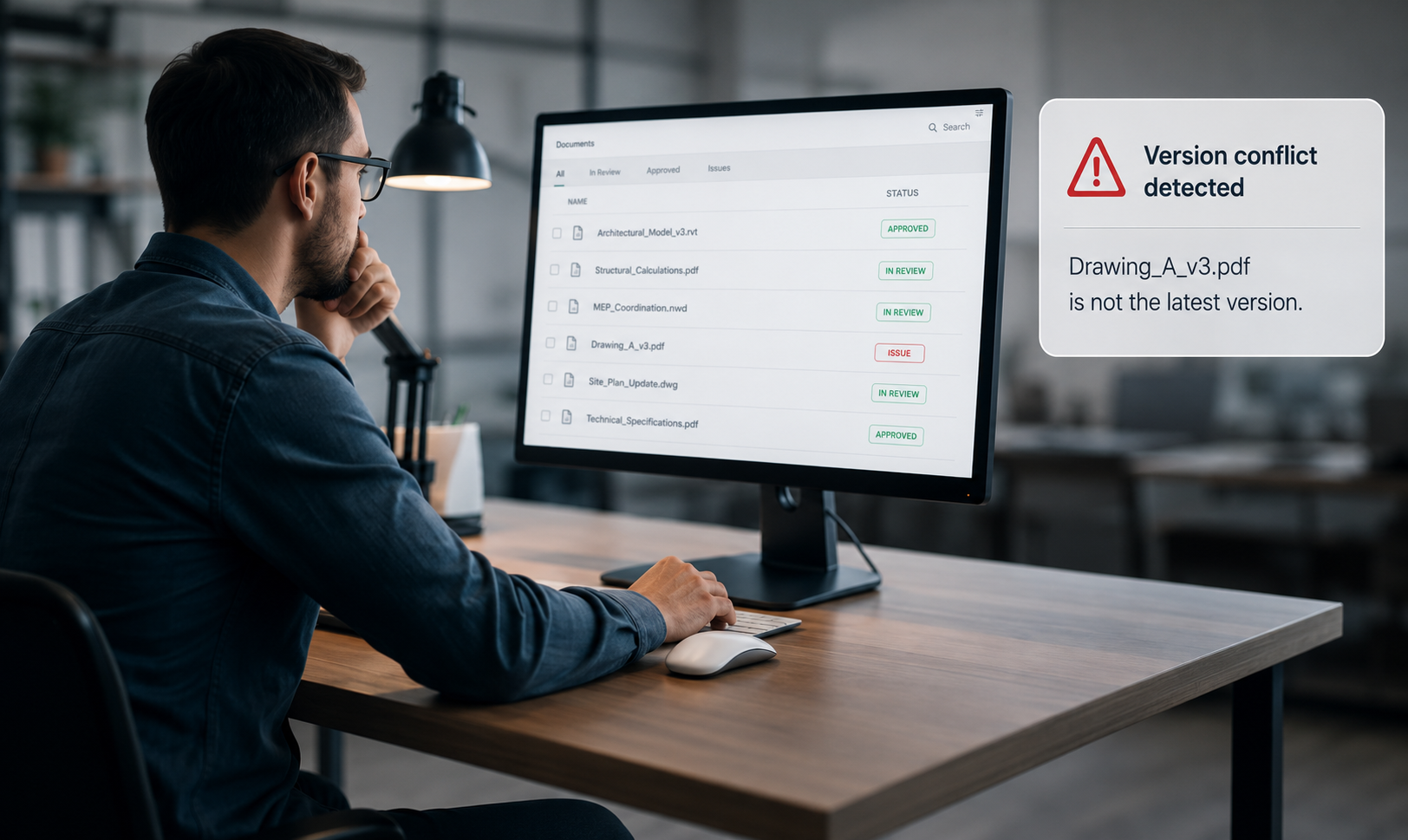
Automation is often associated with saving time.
Its greater value is improving decision-making.
When information moves automatically between teams and systems, project leaders gain a clearer picture of what is happening. They spend less time collecting updates and more time responding to what matters.
Real-time visibility allows teams to identify potential issues earlier, monitor progress more accurately, and make decisions based on current information rather than assumptions.
Technology becomes a tool for clarity, not complexity.
Organizations that automate routine workflows report improvements beyond efficiency. Better process visibility enables faster decisions, while leading automation initiatives have achieved around 30% improvements in operational efficiency by eliminating repetitive coordination work and improving access to reliable project information.
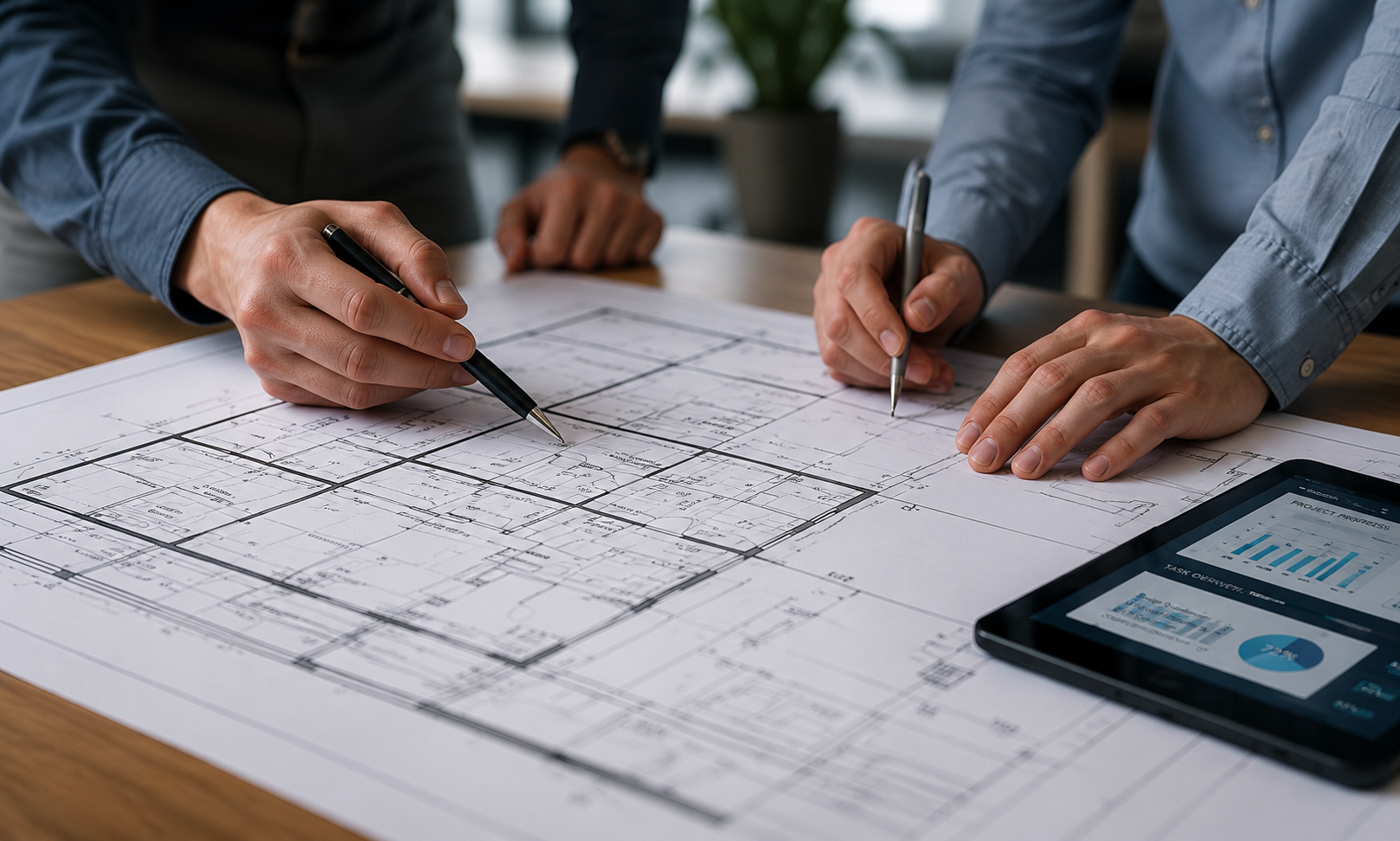
Quality assurance remains one of the most important responsibilities in every AEC project.
Yet many quality processes still rely heavily on manual reviews, spreadsheets, and disconnected communication.
Automation helps standardize these activities.
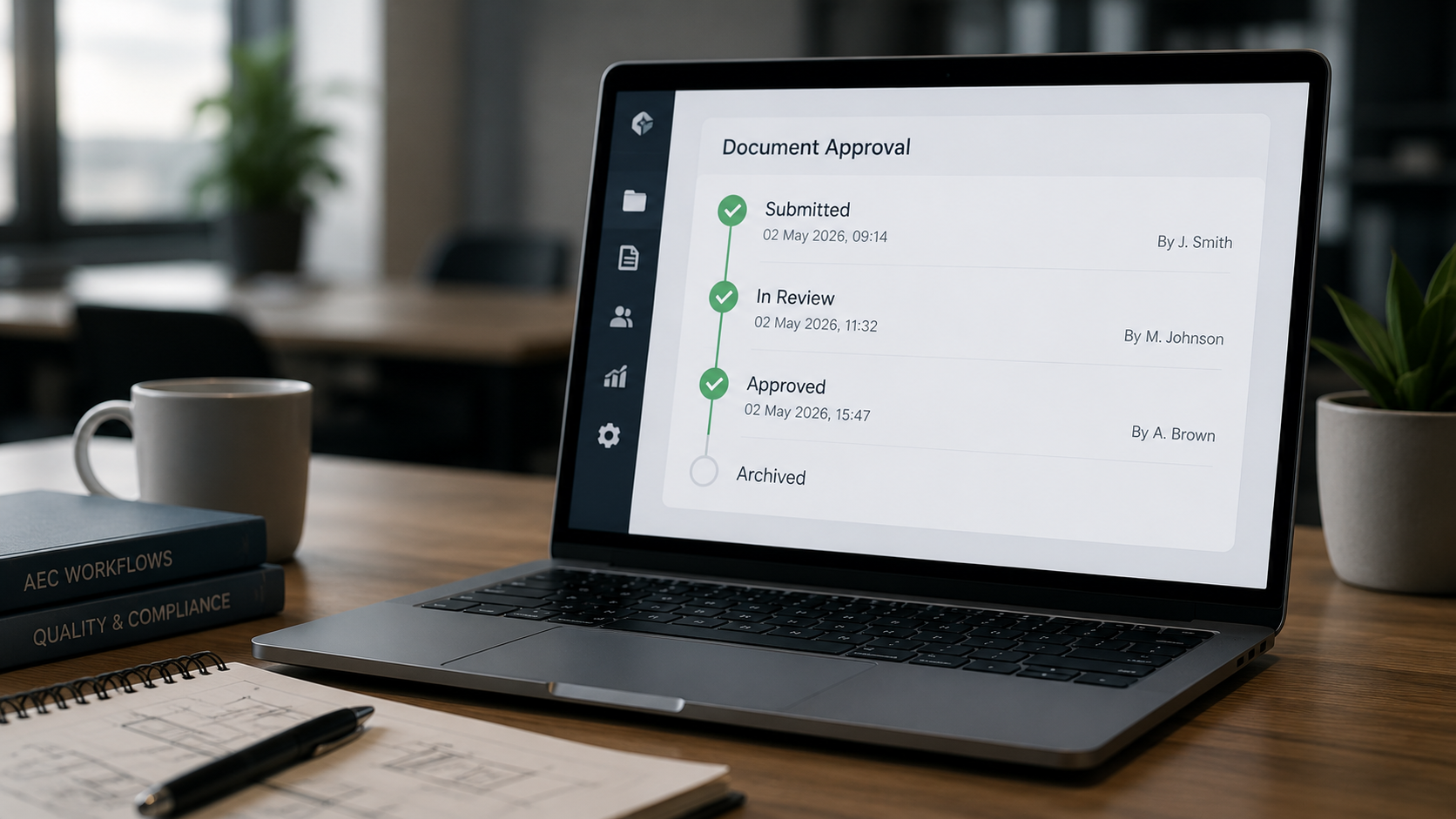
Routine validations, document reviews, approval workflows, and compliance checks can follow predefined rules without removing human oversight.
Engineers continue making decisions.
Automation helps ensure the right information reaches them at the right moment.
Standardized digital workflows also improve consistency. Automation creates repeatable approval processes, complete audit trails, and fewer opportunities for manual errors, helping teams maintain quality across increasingly complex projects.
Projects rarely depend on a single platform.
Design software, document management systems, ERP solutions, field applications, and collaboration tools all contribute to the delivery process.
The challenge is not having multiple systems.
The challenge is keeping them connected.
Automation enables information to move between these platforms without repeated manual input. Teams work from the same data, reducing inconsistencies and improving collaboration across disciplines.
When data stays connected, projects become easier to manage.

Automation is also evolving.
Instead of executing only predefined rules, AI can now help prioritize tasks, identify anomalies, summarize project information, and support teams with contextual recommendations.
This does not replace established workflows.
It strengthens them.
The result is a working environment where teams spend less time searching for information and more time applying their expertise.
Reducing project risk is not about adding more software.
It is about designing processes that support people throughout the project lifecycle.
When automation becomes part of everyday operations, organizations gain more predictable delivery, stronger collaboration, and better visibility across projects.
These improvements are not measured only in hours saved.
They are reflected in fewer errors, more informed decisions, and greater confidence from both teams and clients.
At Galeyo, we help AEC organizations design digital solutions that support the way people work.
From workflow automation and system integration to AI-powered solutions and data-driven platforms, our focus is on creating technology that simplifies complex processes rather than adding new ones.
Every organization has different challenges.
The right solution starts with understanding those challenges and building systems that make work more connected, reliable, and sustainable over time.
Technology delivers its greatest value when it helps projects move forward with confidence.