

A product does not stop existing at the point of sale.
Its useful data often does.
Imagine an industrial pump leaving a factory with a serial number, material declaration and maintenance schedule. It is installed in a building, serviced by several companies and eventually transferred to a new owner.
Ten years later, someone needs to know which components were replaced, which materials it contains and whether it can be repaired or recovered.
The answer probably exists.
Part of it is in a product system. Part of it is in a PDF. A service record sits in another platform. The original supplier email is buried in an inbox belonging to someone who left years ago.
The product is still there. Its story has fragmented.
The Digital Product Passport is an attempt to change that.
On 20 July 2026, the European Commission launched the Digital Product Passport Registry, together with a testing environment for organisations preparing to use it. The Registry forms part of the wider Digital Product Passport system established under the EU’s Ecodesign for Sustainable Products Regulation.
This does not mean that every physical product needs a passport today. The rollout is progressive. Certain electric vehicle, light means of transport and industrial batteries are expected to be the first product groups with mandatory passports from 18 February 2027. Iron and steel, textiles, construction products and other categories are expected to follow through product-specific rules.
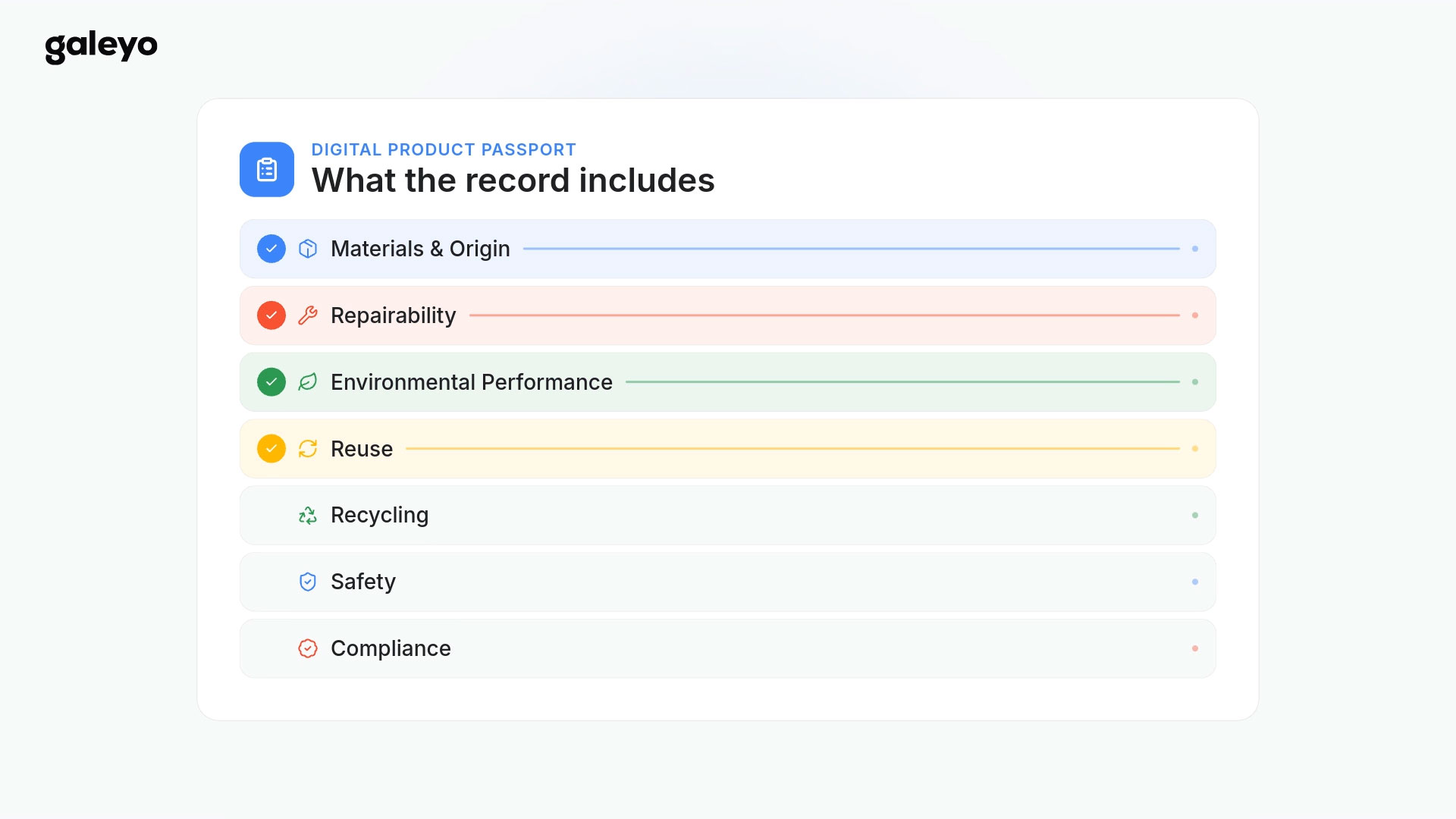
The exact information will also differ by product group. Depending on the applicable legislation, a passport may include information about materials, origin, environmental performance, repair, maintenance, reuse, recycling or compliance.
So the passport is not necessarily a complete diary of everything that has ever happened to a product.
But it is a new expectation that relevant product information should remain available long after the first transaction.
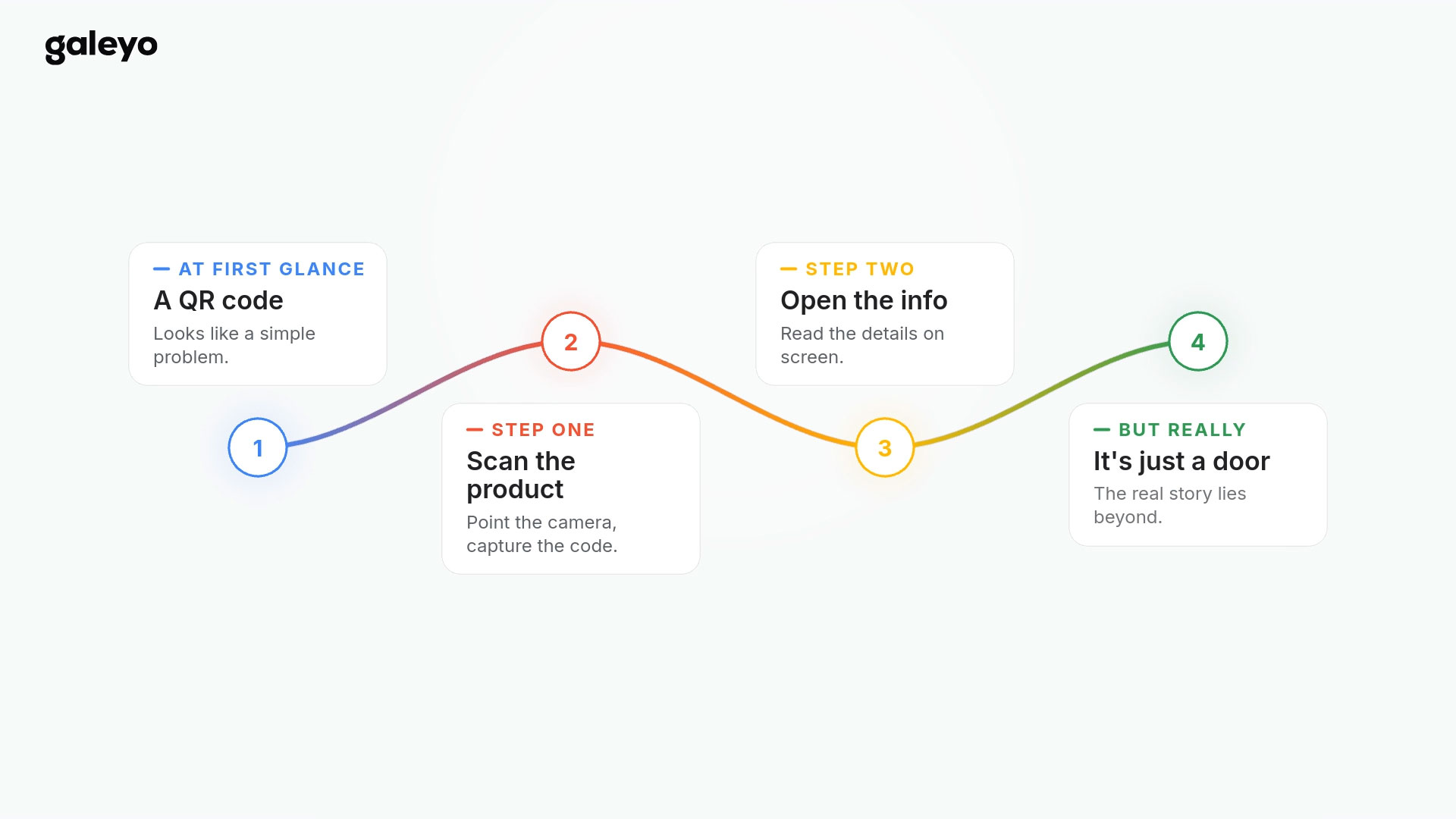
At first glance, the Digital Product Passport looks like a labelling project.
Attach a QR code. Scan it. Open the product information.
But a QR code is only one possible data carrier, and the carrier is not the passport itself. Depending on the product and the rules that apply to it, other technologies may also be used.
More importantly, the EU Registry is not intended to become one enormous central database containing every technical detail about every product.
The DPP Registry stores unique identifiers, registration data and high-level metadata. The complete product information remains decentralised, hosted by the responsible economic operator or by a Digital Product Passport service provider acting on its behalf.
The code on the product therefore acts as a door.
Behind that door, the right information still has to exist. It has to be accurate, accessible and understandable to the person or system requesting it.
A perfect QR code can only point to poor data faster.
A product’s information is rarely created by one organisation.
A supplier knows the origin and composition of a material. The manufacturer creates the model and production data. A distributor handles market information. An installer knows where the product was placed. A service company records repairs. A recycler needs to understand what can be safely separated and recovered.
Each participant adds part of the story.
That raises questions that are more difficult than generating a label:
The Registry’s implementing rules recognise that different products may need to be registered at model, batch or individual item level, depending on the applicable legislation.
That distinction matters.
Information about a product model may be relatively stable. Batch-level information can change with materials or production conditions. Item-level information may continue evolving throughout years of use, repair and maintenance.
The more detailed the passport becomes, the less realistic it is to maintain it through manual uploads and occasional spreadsheet updates.
It has to connect to the systems where product information is already created and changed.
Moving data from one system to another is not enough.
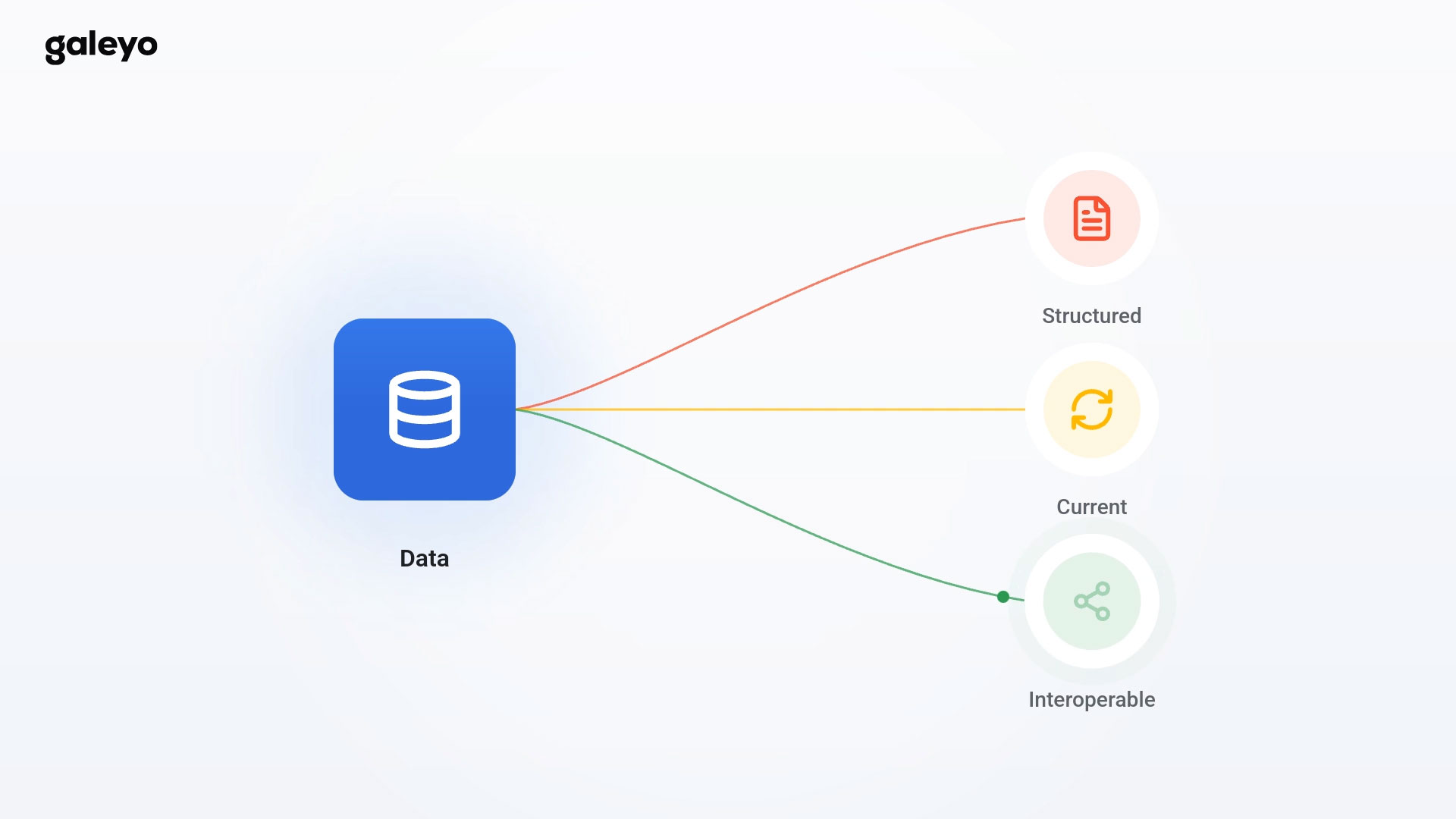
Two systems can exchange a field called “material” and still disagree about what that field means. One may contain a commercial name, another a material standard, and a third a percentage-based composition.
The file has moved. The meaning has not.
That is why interoperability sits at the centre of the DPP system.
In July 2026, six of eight planned harmonised Digital Product Passport standards were published. They cover areas including unique identifiers, data carriers, interoperability, APIs, data exchange protocols and storage. The Registry also includes a semantic repository with machine-readable models, structures, definitions and shared vocabulary.
This technical foundation is important because a passport has to work across industries, countries and organisations that did not design their systems together.
A repairer should not need access to the manufacturer’s internal software to understand a replacement part. A recycler should not need to interpret an unstructured technical document before handling a material. A public authority should be able to verify compliance without requesting the same information through a separate manual process.
Interoperability means that data can travel without losing its context.
A company can approach the Digital Product Passport as a compliance export.
Gather the required information. Build a record. Register it. Move on.
That may work once.
It becomes fragile as soon as a material changes, a new supplier is introduced, a component is replaced or the product is updated.
A more useful approach begins with the product lifecycle itself.
Which systems already contain the required information? Which data is created during engineering, production, sales and service? Which changes should automatically trigger an update? Where is validation needed before information becomes part of the passport?
The Commission allows organisations to register passports through either a secure interface or an API. That makes it possible to connect registration to existing product systems rather than treating every passport as an isolated manual task.
A practical starting point is one product line, not the entire portfolio.
Map the relevant information. Identify the source for each data point. Name the owner. Decide whether it belongs at model, batch or item level. Then test what happens when something changes.
The difficult part is rarely creating the first passport.
It is keeping the thousandth one accurate.
The Digital Product Passport is being introduced to support transparency, circularity and compliance. But the same data foundation can also improve ordinary business operations.
Reliable product information can make maintenance easier. It can support faster identification during a recall, clarify spare-part compatibility, reduce repeated document requests and preserve technical knowledge when people or suppliers change.
For repairers and recyclers, relevant passport data may provide access to disassembly instructions, compatible parts, material composition and information about substances requiring careful handling. The exact data will depend on the product-specific requirements.
The opportunity is not to place every possible fact inside a digital passport.
It is to create a product information layer that remains useful across more than one transaction, team or system.
At Galeyo, we work with organisations in the mechanical and AEC industries where product information already moves through complex technical environments.
The recurring challenge is not simply collecting more data. It is connecting processes and systems so that the information can be found, understood and used by the people who need it.
In our work with Bimify, for example, diverse inputs such as CAD files, point clouds, PDFs and images are transformed into usable digital building models. Those models then need to remain accessible, shareable and open to updates across different tools and workflows.
A BIM model is not a Digital Product Passport.
But the underlying engineering problem is familiar: fragmented technical information has to become a structured digital representation that survives beyond the system where it was first created.
For Digital Product Passport readiness, that means looking beyond the visible label. It means mapping data sources, defining ownership, designing integrations and creating workflows that keep information reliable over time.
That is the kind of work that sits naturally across Galeyo’s approach to workflow design, solution architecture, system evaluation and custom software development.
Products already have histories.
The problem is that those histories are often scattered across organisations, formats and systems that were never designed to communicate.
The Digital Product Passport Registry creates part of the infrastructure needed to change that. The data carrier creates an entry point. Standards create a shared technical language.
But the product’s memory will not be created by the QR code.
It will be created by clean, connected and trusted data, and by the people and systems responsible for keeping it current.
Could your product explain its own history?
This article presents a technology and product-data perspective on the Digital Product Passport and does not constitute legal advice. Product-specific requirements and implementation dates should be assessed under the applicable EU legislation.